6
Years
#1071977
Licensed
100%
Owner-Run
Surfaces That Handle Daily Vehicle Traffic
Concrete Driveways & Walkways in Santa Maria for properties requiring durable access routes and pedestrian paths
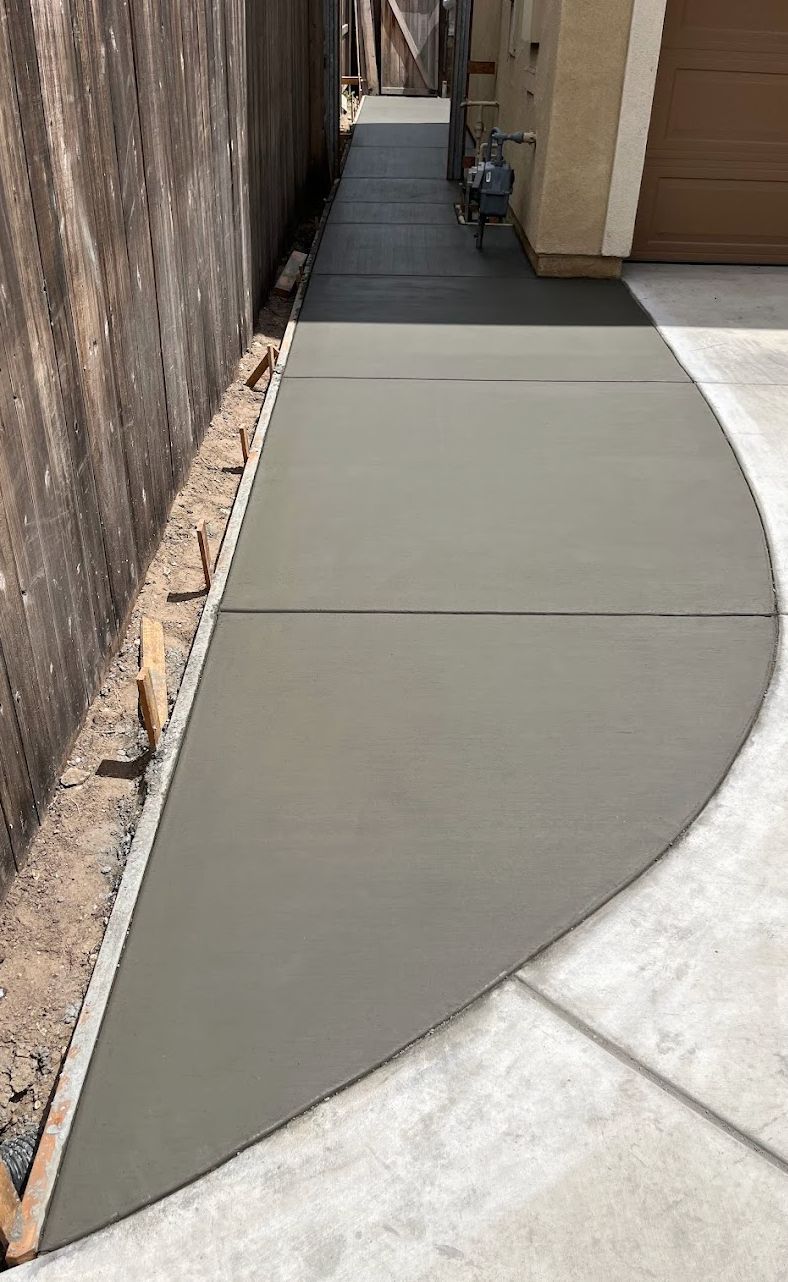
Driveways crack and settle when subgrade preparation doesn't account for soil movement or when drainage directs water underneath the concrete instead of away from it. McNeal Construction installs residential and commercial driveways designed to handle repeated vehicle loads without surface deterioration, beginning with grading that establishes proper slope for water runoff. Driveway approaches, apron installations, sidewalks, and pedestrian pathways across Santa Maria require forming systems that maintain dimensional accuracy and reinforcement that controls cracking as the concrete cures and ages.
The installation process involves compacting the subgrade to eliminate voids, placing aggregate base material in controlled lifts, and forming edges to the specified thickness and slope. Concrete is placed, consolidated, and finished using techniques appropriate for the surface texture you select, with control joints saw-cut or tooled to guide any cracking into planned locations rather than across visible surfaces.
Request a project estimate to review grading requirements and finish options for your driveway or walkway installation.
How Driveways Handle Long-Term Loads
Concrete thickness for driveways typically ranges from four to six inches depending on expected vehicle weights and soil conditions, with reinforcement placed at mid-depth to control crack width rather than prevent cracking entirely. Finishing methods vary from broom finishes that provide traction in wet conditions to smoother troweled surfaces appropriate for covered or decorative applications. Joints are spaced according to slab thickness to manage shrinkage stresses that develop as concrete loses moisture during the curing period.
After installation, the surface provides a stable driving and parking area that sheds water toward edges or drains, resists oil and fuel staining better than asphalt alternatives, and maintains its profile without the rutting or potholing common in softer paving materials. You'll notice the concrete remains dimensionally stable across seasonal temperature changes and requires minimal maintenance beyond occasional cleaning.
Apron installations where driveways meet public sidewalks must comply with local accessibility standards, while longer driveways may require intermediate control joints to prevent random cracking. Decorative enhancements like exposed aggregate borders or stamped patterns can be integrated during finishing, though they add both cost and complexity to the installation process.
Questions Before Starting Your Project
Driveway installations involve decisions about thickness, reinforcement, drainage, and finish that affect both performance and cost.
What subgrade preparation does a driveway require?
Subgrade is excavated to proper depth, loose soil is removed or compacted, and aggregate base material is placed in lifts and compacted to create a stable, well-drained foundation that won't settle unevenly under the concrete.
How does drainage planning prevent water damage?
Proper slope directs runoff away from structures and toward drainage paths, while joints and edges are sealed where necessary to prevent water infiltration that can undermine the base and cause settling.
When should control joints be spaced in a residential driveway?
Control joints are typically spaced at intervals equal to two to three times the slab thickness in feet, so a four-inch slab would have joints every eight to twelve feet to manage shrinkage cracking predictably.
What finish options work best for vehicle traffic areas?
Broom finishes provide slip resistance and hide minor surface imperfections, while troweled finishes offer a smoother appearance but can become slippery when wet and show tire marks more readily.
Why do some driveways in Santa Maria crack while others remain intact?
Cracking results from inadequate subgrade preparation, improper reinforcement placement, missing or poorly spaced control joints, or drainage issues that allow water to pool beneath the slab and cause settling.
Projects in both established neighborhoods and newer developments benefit from proper grading and drainage planning that accounts for existing site conditions. McNeal Construction evaluates your property layout to design driveway and walkway installations that improve accessibility and curb appeal while providing long-term durability.