6
Years
#1071977
Licensed
100%
Owner-Run
Walkways Built to Code and Daily Traffic
Commercial Paving & ADA Walkways in Santa Maria for properties requiring compliant pedestrian access and durable surface systems
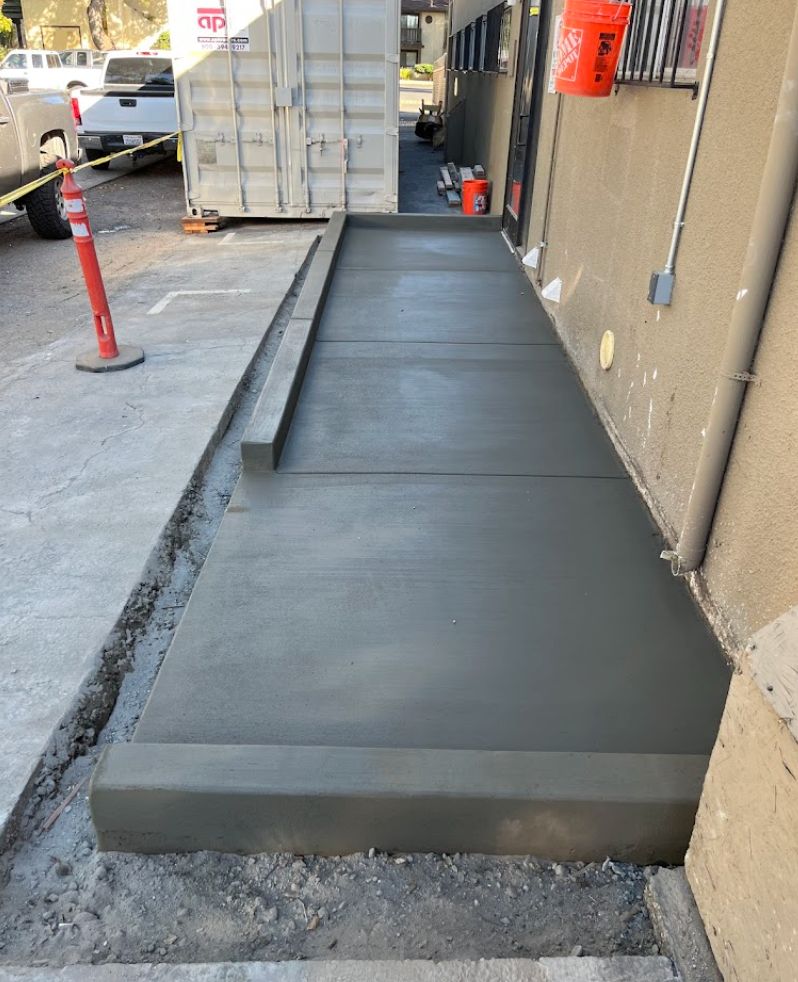
Retail centers, office complexes, and industrial facilities in Santa Maria require paved pedestrian areas that handle foot traffic, shopping carts, and delivery equipment while meeting ADA slope and surface requirements. Non-compliant walkways create liability exposure when slopes exceed allowable gradients, surfaces develop trip hazards from settling or cracking, or accessible routes lack proper transitions at curbs and doorways. McNeal Construction installs commercial sidewalks, dumpster pads, and ADA-compliant ramps that reduce legal risk and provide durable access points designed for years of use without surface degradation.
Walkway construction begins with grading the subbase to establish proper drainage away from buildings and entry points, eliminating standing water that undermines pavement and creates slip hazards. ADA ramps require slopes no steeper than one inch of rise per twelve inches of run, with level landing areas at the top and bottom measuring at least five feet square to accommodate wheelchair maneuvering.
Schedule a site assessment to identify current access deficiencies and plan compliant improvements.
What Changes After Compliant Walkways Are Installed
Commercial paving projects incorporate base preparation that prevents the surface cracking common in improperly compacted installations, with aggregate base compacted in layers using plate compactors or rollers before asphalt or concrete placement. Dumpster pads require thicker base sections and reinforced concrete because repeated impacts from waste containers and collection truck forks concentrate load over small areas, causing standard residential-thickness slabs to crack within months of installation.
After walkways are completed, customers and employees move safely between parking areas and building entrances without navigating broken pavement, abrupt elevation changes, or ponding water that accumulates in low spots. Accessible routes allow wheelchair users to enter buildings independently, reducing the need for assistance and demonstrating compliance during ADA audits or tenant improvement inspections.
Drainage planning ensures runoff flows toward designated collection points rather than pooling on walking surfaces or draining toward foundations. Traffic flow improvements separate pedestrian routes from vehicle lanes using curbing, bollards, or painted markings that guide movement and prevent conflicts where delivery trucks access loading areas near customer entry points.
Answers to Frequent Service Questions
Property owners often need clarity on ADA requirements, material durability, and maintenance expectations for commercial paving projects.
What makes a ramp ADA-compliant beyond slope requirements?
Compliant ramps include handrails on both sides when the rise exceeds six inches, edge protection to prevent wheels from slipping off the side, and slip-resistant surfaces that remain functional when wet from rain or irrigation overspray in Santa Maria's landscaped commercial areas.
How does asphalt compare to concrete for commercial walkways?
Asphalt costs less initially and allows faster installation, but concrete resists surface wear better under cart traffic and maintains a cleaner appearance over time without the oil staining and aggregate loss common in aging asphalt surfaces.
Why do some walkways crack while others remain intact?
Cracking results from inadequate base thickness, poor compaction, or tree roots that lift sections from below, with proper installation including root barriers near landscaping and base depth calculated based on soil type and expected load.
What preparation does dumpster pad construction require?
Pads need excavation deeper than standard sidewalks, with at least six inches of compacted base and reinforced concrete thickness of six to eight inches to handle both the static weight of full containers and the impact force when trucks drop empties back onto the pad.
How long before new pavement can handle full traffic?
Concrete walkways cure enough for foot traffic within three to five days but reach full strength over four weeks, while asphalt hardens faster but remains vulnerable to deformation from heavy loads during hot weather until the binder fully cures.
McNeal Construction works with business owners, property managers, and facility operators to deliver paving systems that meet code requirements and withstand daily use. Reach out to discuss your commercial property's access needs and receive a site-specific improvement plan.